2025 DCC Award Winner
Sidan Gianyar Dam, Bomanite International Limited, Gianyar, Bali, Indonesia
First Place: Cast-in-Place - Stamped, Over 5,000 sqft
Deep in the heart of Gianyar, Bali, Sidan Dam stands as a symbol of sustainable progress, resource management, and community upliftment. Built to supply much-needed water to the regions of Denpasar, Badung, Gianyar, and Tabanan, this major infrastructure project also carries the potential to become a new eco-tourism destination in Bali. As part of its commitment to supporting impactful national projects, Indocrete played a crucial role in enhancing the dam’s visual and functional landscape through its Stamping System — combining engineering efficiency with aesthetic value.
Inspired by Nature, Guided by Function
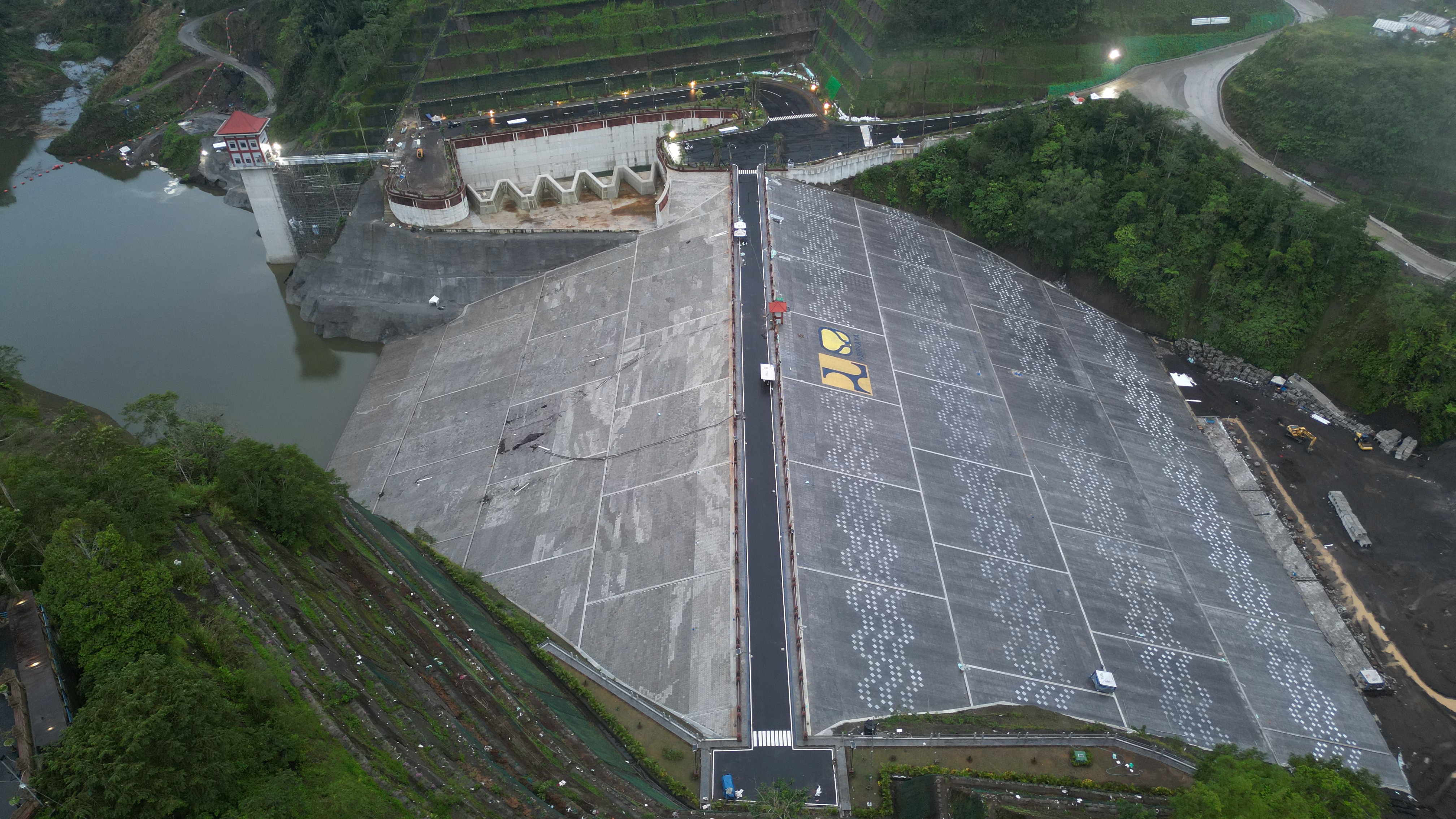
The design of the dam’s rip rap area was conceptualized to reflect the motion and energy of water — a nod to the dam’s core function: to contain and distribute water flow. Initially, the specification called for standard concrete blocks. However, with urgent deadlines looming, the project team sought an alternative solution that maintained both structural integrity and visual quality. Indocrete’s Stamping System became the optimal choice — offering faster application and greater design flexibility without compromising performance.
Designing with Cultural Sensitivity
Indocrete applied two main motifs for this project. The rip rap section features an Ashler pattern, shaded in wave-like tones to emulate flowing water — a powerful visual metaphor for the dam’s mission. Meanwhile, the public access areas utilize a Random Stone pattern in earthy, natural colors that align with the Balinese people’s deep-rooted connection to nature. These design decisions were carefully curated to blend harmoniously with the surrounding environment and resonate with the local cultural aesthetic.
Impacting the Region: Water, Jobs, and Tourism
Once operational, Sidan Dam will provide up to 1,750 liters of water per second, helping to resolve water scarcity across four regencies. But its impact goes beyond utility. With plans to transform the dam into a government-managed tourist attraction, the project is expected to generate significant visitor interest. This not only enhances regional tourism but also creates new job opportunities, stimulates small businesses, and revitalizes the local economy.
Navigating Technical and Logistical Challenges
Executing this project came with a unique set of challenges. The remote location in Bali’s highlands made material mobilization difficult and expensive, as not all logistics providers were willing to access the area. The work zone itself was physically demanding, with slopes as steep as 45 degrees, presenting significant challenges not only in terms of execution but also in upholding strict safety standards throughout the project. The steep incline of the casting area made the stamping process particularly difficult, as achieving consistent pressure and accurate pattern alignment on such terrain required extraordinary effort and precision. In certain sections, the conditions were considered highly risky from a safety perspective, especially during the application of the Indocrete Stamping System. Workers had to exert considerable physical effort to stabilize themselves, often bracing their own body weight while maneuvering stamping tools on the sharply sloped surface — a task made even more hazardous by the constant risk of slipping. Despite these challenges, the Indocrete team managed to carry out the work safely and effectively through a series of proactive safety strategies. These included the use of harnesses and safety ropes in critical areas, the presence of trained safety supervisors on-site at all times, and strategic scheduling of work based on weather forecasts to avoid rain or overly wet conditions. Despite these difficulties, the Indocrete team remained agile. They carefully selected transport partners, managed mobilization independently, and redesigned angular layouts into wave-like curves that matched both the functional and aesthetic goals. By studying accurate weather forecasts and adapting the work schedule accordingly, the team ensured optimal application conditions.
Community Dynamics and Environmental Realities
The remote village setting presented both opportunities and complications. With no ATMs nearby, the team relied on local residents for cash withdrawals, which incurred high service fees. Additionally, land rental for storage was priced steeply as locals recognized the urgency and demand of the project. Rather than resisting these realities, Indocrete took a collaborative approach, choosing to negotiate in good faith and build mutual understanding.
Building Beyond Concrete
More than just a construction solution, Indocrete’s involvement in the Sidan Dam project reflects a holistic philosophy: combining engineering precision, local sensitivity, and adaptive problem-solving. From design to execution, every decision was made with purpose — to support Indonesia’s infrastructure, empower local communities, and contribute to a project that will serve generations to come. Through this endeavor, Indocrete proves once again that concrete doesn’t have to be boring — it can be beautiful, meaningful, and transformative.